Industry
175 robots · 93 companies · 9 categories
Every humanoid robot, ranked and compared on the evidence.
An independent, transparent benchmark of general-purpose humanoid robots. Every robot is scored 0–100 by the Humanoid Metric (HMX) across six weighted pillars — autonomy, manipulation, mobility, hardware, commercial readiness and ecosystem — using only published specs, each one cited.
175
Robots ranked
93
Companies
93
In production / pilot
20
Countries
156 of those are humanoids, scored on the HMX. The other 19 sit in 8 further categories — quadrupeds, cobots, AMRs, aerial, marine, heavy, surgical and domestic — each scored on its own index, never a borrowed humanoid one.
THE WORLD IN MOTION
The Robotics Brief.
The discoveries, deployments and ideas moving robotics forward.
Industry
UR10g-1750 Collaborative Robot Arm
Industry
UR3e Collaborative Robot Arm
Industry
Project Buyer (Human)
Industry
Connecting External Devices
Research
Ros2-apt-source bumped to v 1.3.0
Industry
Safety Programmer (human)
Industry
Topic: chinese robots
Research
MSR Thesis Presentation
Industry
quadrapeds Articles, Stories & News
Industry
UBTECH U1 PRO
Industry
EN: UR Robot Cable Options
Industry
FANUC COOPER CRX-25iA Welding Cobot
Robot learning
Robots Are Learning to Feel
Research
FAQs
Robot learning
Vention opens robotics and physical AI lab in Montreal
Industry
G1+ Full Evolution
Robot learning
FANUC and NVIDIA - Advancing Physical AI
Robot learning
Vention opens Physical AI Lab for manufacturing in Montreal
Research
New ROS PMC Members
Humanoids
AI can’t outrun a humanoid’s hardware
Research
How to Apply for Admission to MSCV
Industry
| RoboticsTomorrow
Industry
Robots protest rampant AI in Poland
Industry
This Robot Will Draw Your Blood Now
Industry
Operator Screen Application
Industry
Pestaña Aplicación
Research
Preparing for Jazzy Sync 2026-09-09
Robot learning
What is the hardest part of learning ROS 2 as a beginner
Industry
Software News and Resources
Industry
Industrial Robot and CNC Software
Industry
Robots on the Runway
Industry
Preface
Industry
End Effector Integration
Humanoids
Humanoids step into the spotlight at IFA Berlin
Humanoid demonstrations, autonomous robot football and a look at how physical AI could enter the home.
Robot learning
How FPGAs become the gatekeepers of physical AI security
Industry
Robotaxi
Research
RI Faculty Business Meeting
Industry
Robot Software
Research
Why we did not extend /diagnostics?
Industry
Coordinated Disclosure Policy
Research
Making is Decision Making
Industry
Release note Software version 5.26.x
Research
Additional Major in Robotics
Research
MSR Program Policies and Forms
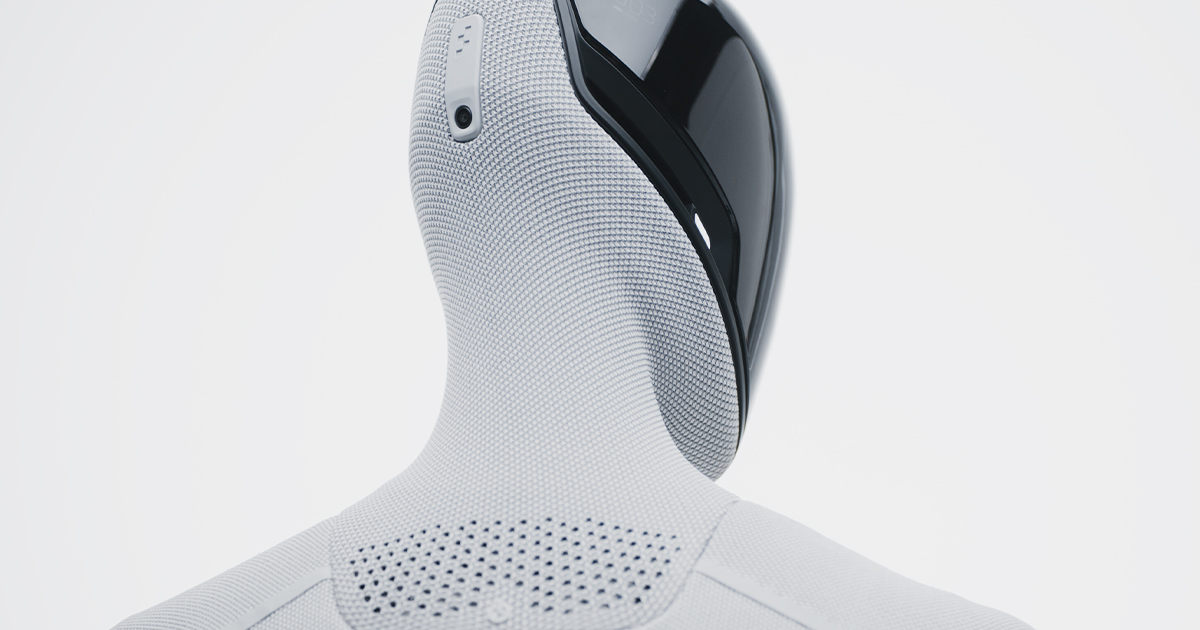 Figure 03 · Image: Figure
Humanoids
Figure secures the compute behind its next generation of humanoids
Figure and Nscale announced plans for up to 100,000 NVIDIA GPUs, with initial deployment targeted for late 2027.
No recent stories in this topic yet. Try another topic.
300 of 300 recent stories
Top 5 humanoids by HMX
Full leaderboard →| # | Robot | HMX |
|---|---|---|
| 1 | 🇺🇸 Figure 03Figure AI |
87.0 |
| 2 | 🇺🇸 Optimus Gen 3Tesla |
85.1 |
| 3 | 🇺🇸 Atlas (electric)Boston Dynamics |
84.8 |
| 4 | 🇩🇪 Agile ONEAgile Robots |
81.2 |
| 5 | 🇨🇳 L7RobotEra (Beijing Xingdong Jiyuan / 星动纪元) |
80.4 |
What else the index covers
Beyond humanoids
175 robots sit in 9 categories, from quadrupeds and cobots to surgical and marine platforms. Each category has its own index and its own reference scales — QMX for quadrupeds, MMX for manipulators, MRMX for mobile robots — because a quadruped's 71 and a humanoid's 71 answer different questions.
The parts behind the specs
47 component manufacturers across 8 categories and 11 countries — actuators, harmonic drives, dexterous hands, batteries, onboard compute and sensors. These are the suppliers and cost drivers behind the specifications the index scores. Profiled and cited, not ranked.
Benchmarks — and the gap
3 standardized benchmark protocols are registered, and not one robot has a published result under any of them. Every HMX score is computed from disclosed specifications, never a measured run. That gap is shown rather than papered over.
An open standard, in draft
The Humanoid Interop Standard proposes one machine-readable way to describe a robot's capabilities so an LLM controller can command any compliant machine. Layer 0 is live — every robot here already emits a manifest — and the whole dataset is readable as public JSON.
What the index rewards
Capability over choreography
Autonomy is the heaviest pillar (25%). Teleoperation starts at 35 points and can reach 48 with AI and compute bonuses. Overall ranking also depends on the other five pillars; it does not establish autonomous task performance.
Hands do the work
Manipulation & dexterity carry 20%. High-DoF, tactile, dexterous hands with real payload separate robots that walk around from robots that do the job.
Shipping beats slideware
Commercial readiness (15%) combines product maturity with recorded deployment mentions. Consult the deployment ledger for evidence: legacy mentions are unverified and do not establish paid or active production.
Every number is cited
Robot profiles include source links and a confidence grade. Evidence quality varies: multiple links do not guarantee independent support for every specification. Consult the sources and confidence notes before comparing.
humanoidmetric.com in 2026: the index at a glance
humanoidmetric.com scores 156 humanoid robots and 19 robots in 8 other categories, from 93 companies. 74 of the humanoids are shipping to customers; the other 82 are in pilots, prototypes, research platforms or retired, and the index scores that difference rather than the announcement.
In the last 30 days 25 robots have joined the index, most recently Xiao Di (BYD), Kangaroo (PAL Robotics) and Optimus Gen 2 (Tesla). Each is held to the same two-independent-sources standard before it is ranked.